
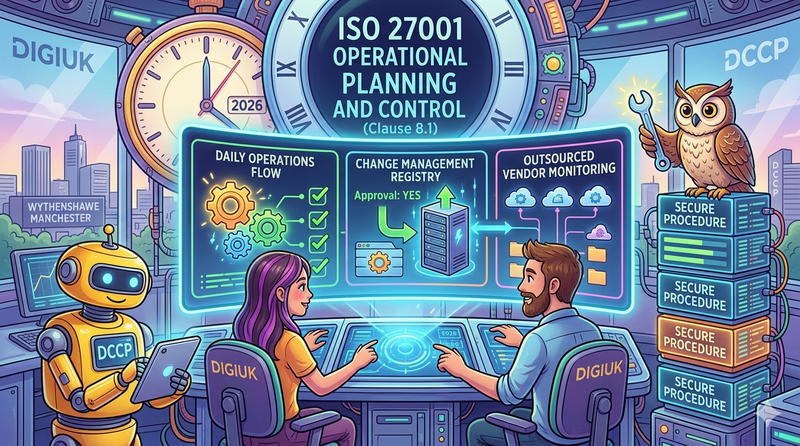
Having brilliant security policies on paper is a fantastic start, but they only work if you put them into practice every single day. This is where ISO 27001 Operational Planning and Control comes into play. Under Clause 8.1, your business must prove that it actually plans, implements, and controls its daily security processes. Think of it as turning your security checklist into a well-oiled machine.
Keeping Daily Operations Secure
To meet the high standards of ISO 27001 Operational Planning and Control, a professional business needs to focus on consistency. This means creating clear routines for your team to follow:
-
Documented Procedures: Writing down exactly how tasks like software updates or system backups should be handled.
-
Change Management: Ensuring that any change to your network—like adding a new server—is properly tested and approved before it goes live.
-
Outsourced Processes: Making sure that outside contractors or cloud vendors follow the exact same high security standards that you do.
At DigiUK, we believe that secure operations shouldn’t slow your business down. We help small businesses design simple, adorable workflows that embed security directly into daily habits. This professional structure gives you total peace of mind, knowing that your systems are running safely even when you aren’t watching.
Technical Control with DCCP Expertise
Daily operations are where your technical team’s training truly shines. When managing ISO 27001 Operational Planning and Control, having a team lead trained in our DCCP Course ensures your operational controls are practically unbreakable.
A DCCP-trained professional handles daily operations with advanced technical precision by:
-
Automating Security Baselines: Setting up automated scripts to ensure all new workstations match your required security configuration instantly.
-
Monitoring Operational Logs: Regularly checking system logs to ensure daily processes, like automated data backups, are completing successfully without errors.
-
Managing Vulnerability Patches: Creating a strict calendar for applying critical security patches to network infrastructure, eliminating gaps before threats can exploit them.
This level of operational discipline provides the exact “hard evidence” that UK certification bodies love to see during an audit.
Handling Unexpected Changes
The standard explicitly states that you must control planned changes and review the consequences of unintended changes. If a software update causes an unexpected glitch, a professional operational plan ensures you have a backup ready to roll back to instantly. Being prepared for the unexpected is what separates a mature ISMS from a lucky one.
Conclusion: The Blueprint for Daily Digital Trust
Consistency is the secret ingredient to long-term compliance. By mastering ISO 27001 Operational Planning and Control, you protect your data, satisfy your auditors, and build an incredibly reliable business infrastructure.
To learn more about maintaining secure operational environments, take a look at the NCSC Secure Design Principles. Want to streamline your daily security workflows? DigiUK in Manchester is standing by to deliver premium guidance and professional DCCP technical training.
Turn operational controls into evidence with our ISO 27001 implementation support.