
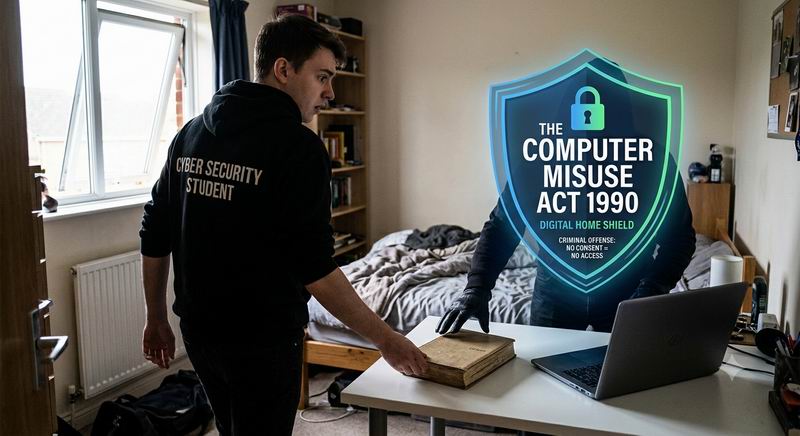
Have you ever wondered how digital superheroes keep the internet safe? Just like real-world police officers, ethical hackers must follow strict rules to ensure they are always doing the right thing. Today, we are going to explore the ultimate rulebook for computers in the United Kingdom: The Computer Misuse Act 1990!
What is the Computer Misuse Act 1990?
Imagine someone walking into your bedroom, opening your private diary, and reading it without asking. That wouldn’t feel very nice, would it? In the UK, doing that to someone’s computer, phone, or online account is actually against the law!
The Computer Misuse Act 1990 (CMA) is the official shield that protects everyone’s digital homes. The absolute golden rule of the internet is simple: No Contract = No Hacking. If you want to learn how to find and fix these system flaws safely and legally, you can join a professional Ethical Hacking Course in Manchester to practice in a secure environment. Even if someone is trying to help a friend or a business, accessing any computer system without explicit, written permission is a criminal offense.
⚖️ The Three Major Rules (Sections) to Remember
The law breaks down digital rule-breaking into different levels, depending on what the person did:
-
Section 1: Unauthorised Access (The Sneak Peek)
-
What it means: Logging into a system, an app, or a friend’s account without their permission—even if you don’t change anything.
-
The Penalty: Up to 2 years in prison.
-
-
Section 2: Access with Intent to Do Harm (The Plotter)
-
What it means: Breaking into a computer specifically to steal something, like digital money, private files, or game accounts.
-
The Penalty: Up to 5 years in prison.
-
-
Section 3: Unauthorised Modification (The Destroyer)
-
What it means: Doing things that cause serious damage, such as spreading bad software (malware) or blocking people from using a service (a DDoS attack).
-
The Penalty: Up to 14 years in prison!
-
Pro-Tip Box: Being a student of cybersecurity is NOT a license to hack! You must only use authorized virtual lab environments or systems that you own 100%.
???? The Ethical Hacker’s Promise
To make sure we stay on the side of good, every cybersecurity professional follows a special agreement called the Code of Conduct. Organizations like the EC-Council Official Website set global standards for these certifications to ensure hackers use their powers for good. This code works like a digital pinky-promise based on four core ideas:
-
Confidentiality: If you find a secret while testing an authorized lab, you never tell anyone else.
-
Authorization: You never perform live attacks outside of your designated safe zone.
-
Reporting: If you spot a digital hole or weakness, you tell the owner right away so they can fix it.
-
Professionalism: Always act with integrity to make the digital world a kinder, safer place.