
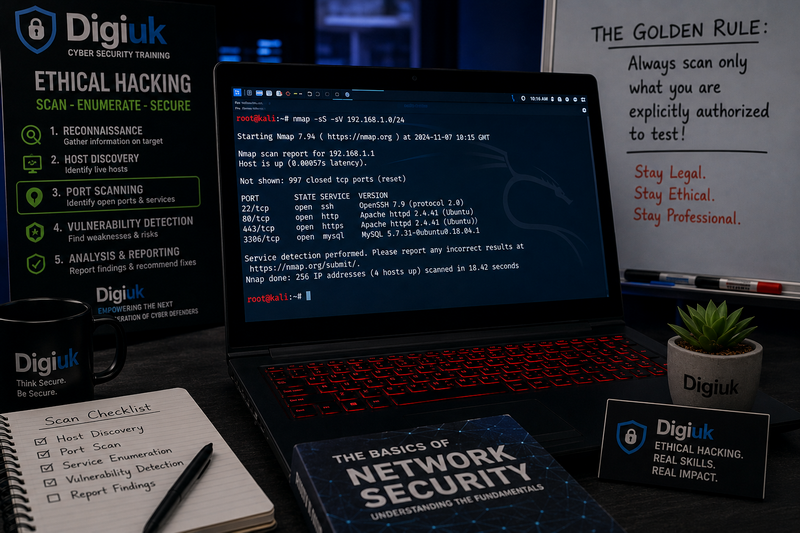
Once a digital detective has a list of IP addresses from their reconnaissance phase, they need to know what those computers are actually doing. Network Scanning allows us to identify live systems and discover open ports. Every computer has thousands of “digital doors” called ports. Some are meant to be open, like a web server port, but others should be locked tight!
By performing a thorough port scanning exercise, we can detect which programs are running behind those doors. This process of vulnerability detection helps us spot outdated software before the bad guys do. If you want to learn how to master these scanning tools legally, you can join our Ethical Hacking Course in Manchester to practice these defense principles in our secure, virtual labs.
The Ethical Way to Scan Networks
Just like picking a lock, scanning a network without permission is a big “no-no” under the Computer Misuse Act 1990. Professionals only perform these tasks inside an authorized, secure environment. We teach the following phases of ethical hacking scanning in our training:
-
Host Discovery: Determining which targets are reachable.
-
Port Scanning: Sending small “pings” to specific ports to see if they reply with a “Hello!”
-
Vulnerability Detection: Checking if the services responding are outdated or have known security holes that need patching.
The Golden Rule: Always scan only what you are explicitly authorized to test! If you want to learn how to master these scanning tools legally and contribute to global security standards, you can visit the EC-Council Official Website to see how pros certify these skills.
Why Digital Detective Training Matters
Proper network scanning is the heartbeat of effective security. By understanding the methodology behind identifying host states, our students become elite security analysts. Whether you are conducting a full penetration test or just hardening a home network, the process remains the same. Professional digital detectives always ensure their scanning activities are focused, authorized, and documented to maintain full compliance with legal standards.