
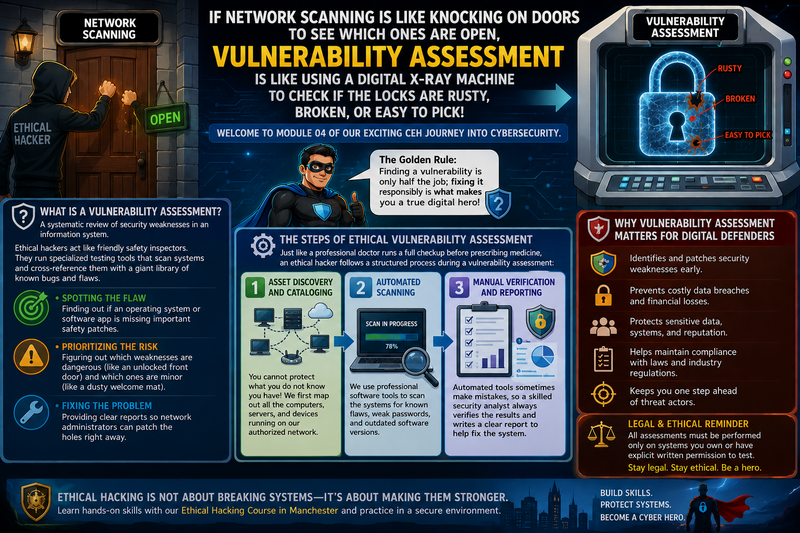
If network scanning is like knocking on doors to see which ones are open, Vulnerability Assessment is like using a digital X-ray machine to check if the locks are rusty, broken, or easy to pick! Welcome to Module 04 of our exciting CEH journey into cybersecurity.
Today, we are going to learn how cyber superheroes use vulnerability assessment tools to inspect systems safely, find hidden weaknesses, and fix them before mischievous digital intruders can cause any trouble.
What is a Vulnerability Assessment?
Imagine building a giant, high-tech treehouse. Even if you lock the door, you might forget that a ground-floor window latch is loose. A vulnerability assessment is a systematic review of security weaknesses in an information system.
Instead of waiting for a bad guy to break in, ethical hackers act like friendly safety inspectors. They run specialized testing tools that scan systems and cross-reference them with a giant library of known bugs and flaws.
-
Spotting the Flaw: Finding out if an operating system or software app is missing important safety patches.
-
Prioritizing the Risk: Figuring out which weaknesses are dangerous (like an unlocked front door) and which ones are minor (like a dusty welcome mat).
-
Fixing the Problem: Providing clear reports so network administrators can patch the holes right away.
The Golden Rule: Finding a vulnerability is only half the job; fixing it responsibly is what makes you a true digital hero! If you want to learn how to master these scanning and assessment tools legally, you can join our hands-on Ethical Hacking Course in Manchester to practice in a secure environment.
The Steps of Ethical Vulnerability Assessment
Just like a professional doctor runs a full checkup before prescribing medicine, an ethical hacker follows a structured process during a vulnerability assessment:
1. Asset Discovery and Cataloging
You cannot protect what you do not know you have! We first map out all the computers, servers, and devices running on our authorized network.
2. Automated Scanning
We use professional software tools to scan the systems for known flaws, weak passwords, and outdated software versions.
3. Manual Verification and Reporting
Automated tools sometimes make mistakes, so a skilled security analyst always verifies the results and writes a clear report to help fix the system.
To see how global cybersecurity standards define these testing processes, you can visit the EC-Council Official Website to explore professional certifications that top security leaders use worldwide.
Why Vulnerability Assessment Matters for Digital Defenders
Proper vulnerability assessment is the ultimate shield against cyber threats. By identifying and patching security weaknesses early, businesses can prevent costly breaches and keep their data safe. Whether you are managing a corporate network or protecting personal devices, understanding how to run a proper assessment ensures you stay one step ahead of threat actors while maintaining strict compliance with the Computer Misuse Act 1990.